5. Inflection classes
Qumin’s basic unit when looking at inflection classes is the microclass.
- Microclass:
A set of lexemes that share the exact same set of alternation patterns across all pairs of cells.
The three algorithms presented below manipulate microclasses in various ways to provide meaningful insights into their structure.
Microclass heatmaps
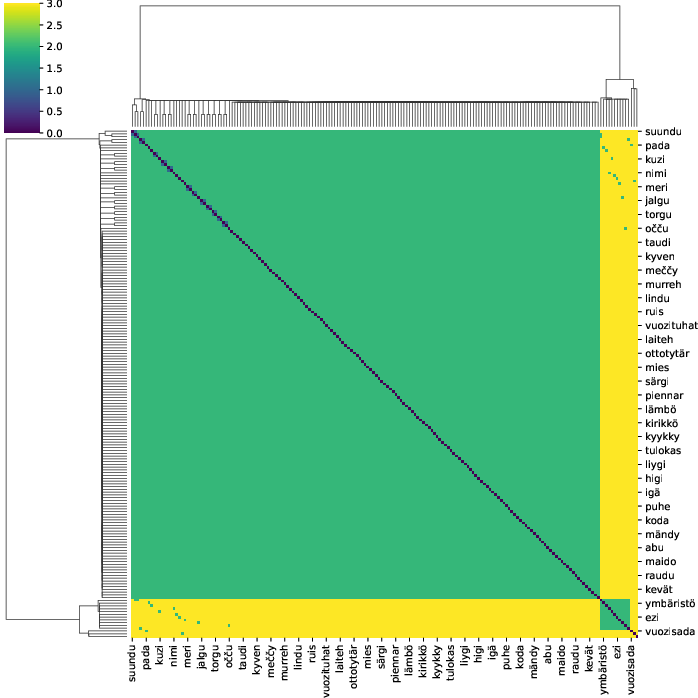
The microclass script uses a clustering algorithm to identify simmilarities between microclasses:
qumin action=microclasses data=parakar/parakar.package.json \
patterns=results/patterns/metadata.json \
cells="[abl.sg, gen.sg, part.sg]" hydra.run.dir=results/microclasses
In the example below, two large groups emerge, which are identifiable both through the colors on the heatmap and through the tree on the side of the picture:
Tip
Have a look at the microclass heatmap CLI reference to see all available options for microclass computations.
Inflection class lattices
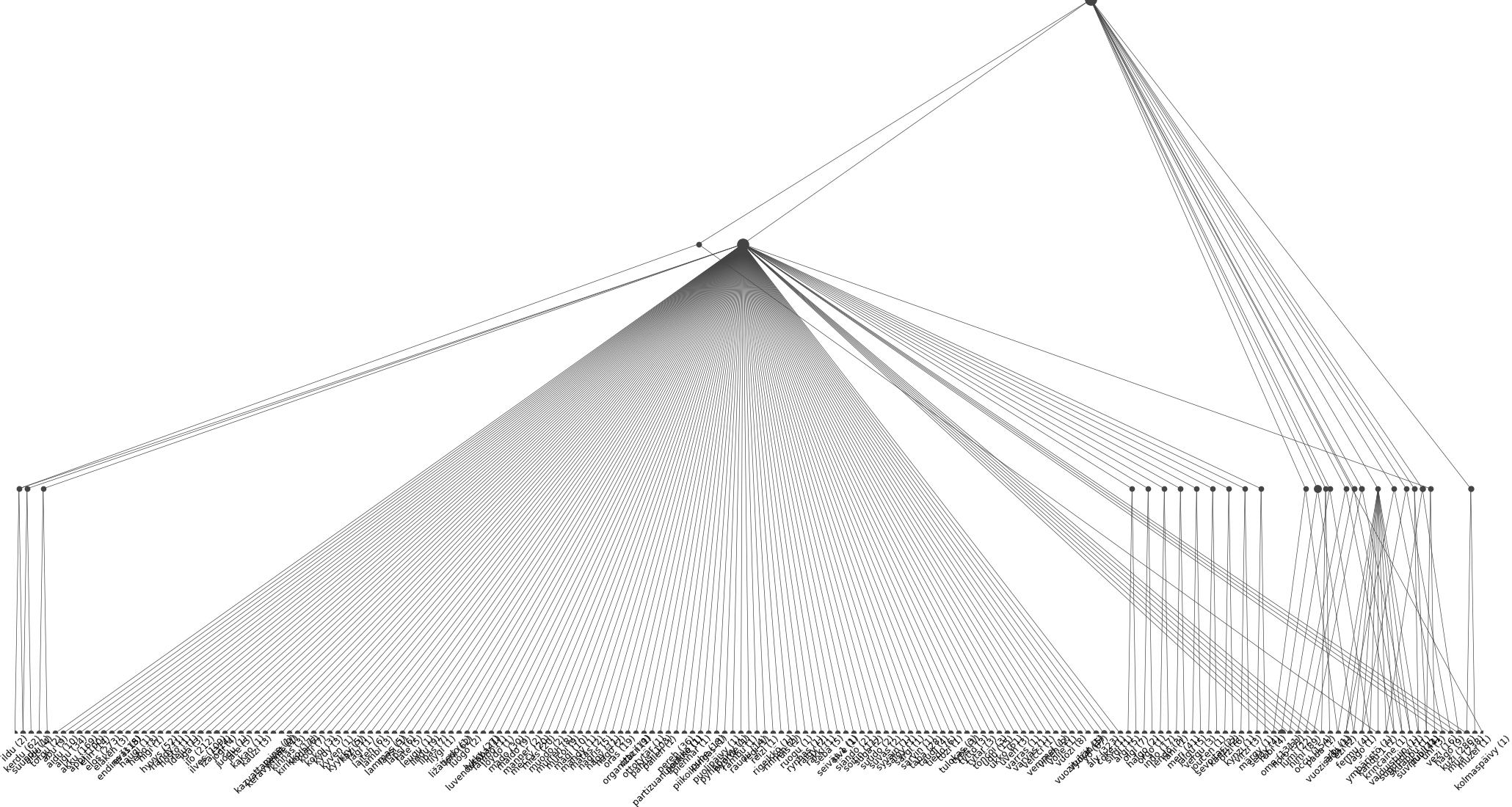
Inflection classe lattices (Beniamine 2018, Beniamine 2021) show which microclasses share which patterns:
qumin action=lattice data=parakar/parakar.package.json \
patterns=results/patterns/metadata.json \
cells="[abl.sg, gen.sg, part.sg]" hydra.run.dir=results/lattice \
lattice.png=True lattice.html=True
Each node at the bottom of the hierarchy represents a microclass. Each node at higher levels represents a set of microclasses that share one or several alternation patterns:
Tip
Have a look at the lattice CLI reference to see all available options for inflection class lattices.
Macroclasses
Warning
This algorithm is much slower than the others. It is implemented to provide reproductibility for the results of Beniamine & al (2018) but we recommend using other algorithms for a more in depth understanding of inflection classes.
qumin action=macroclasses data=parakar/parakar.package.json \
patterns=results/patterns/metadata.json \
cells="[abl.sg, gen.sg, part.sg]" hydra.run.dir=results/macroclasses
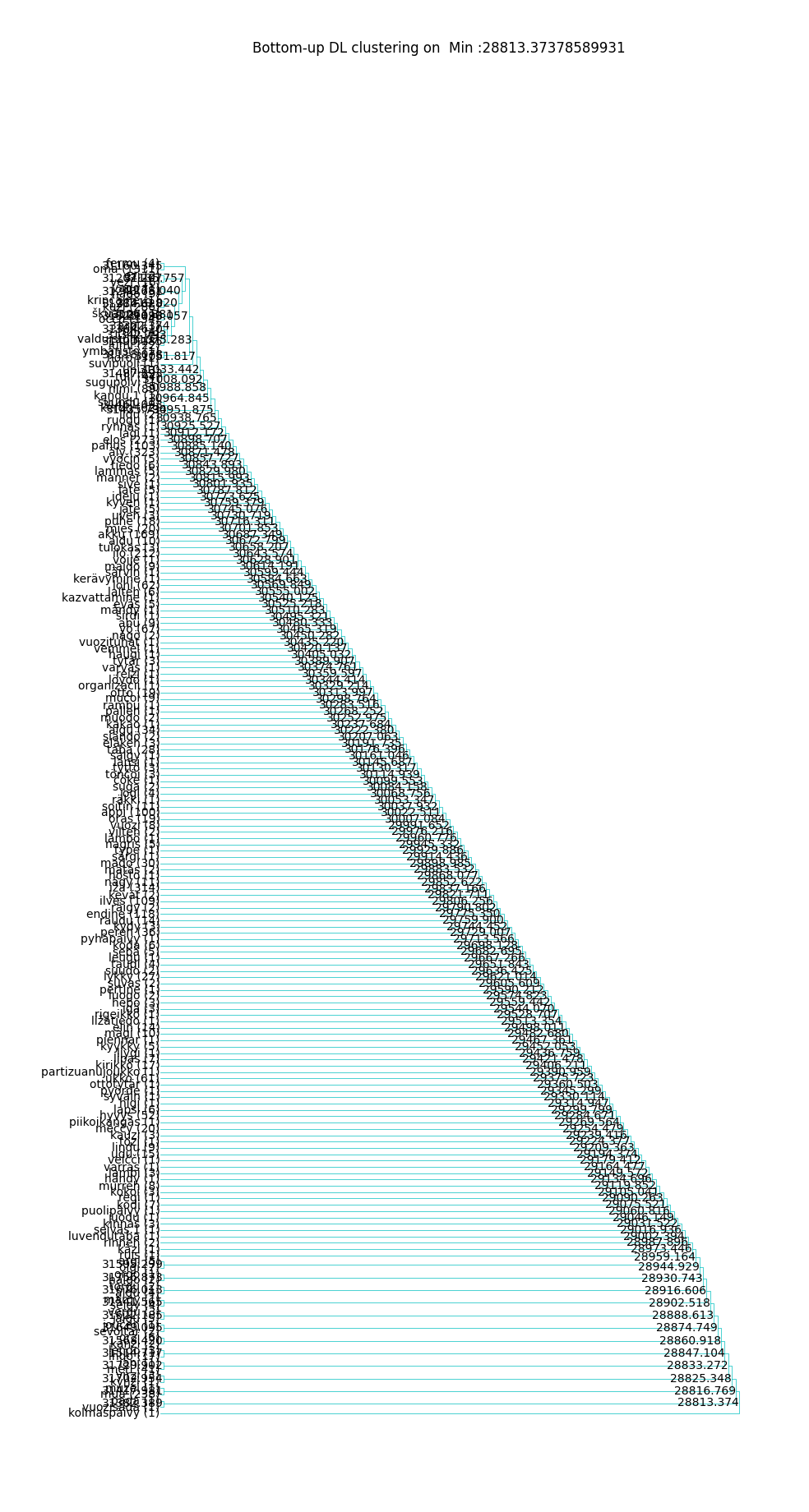
The macroclass algorithm merges microclasses into larger classes, trying to minimize the length of the description of the system. It outputs a list of macroclasses and a merge tree:
Tip
Have a look at the macroclass CLI reference to see all available options for macroclass computations.